
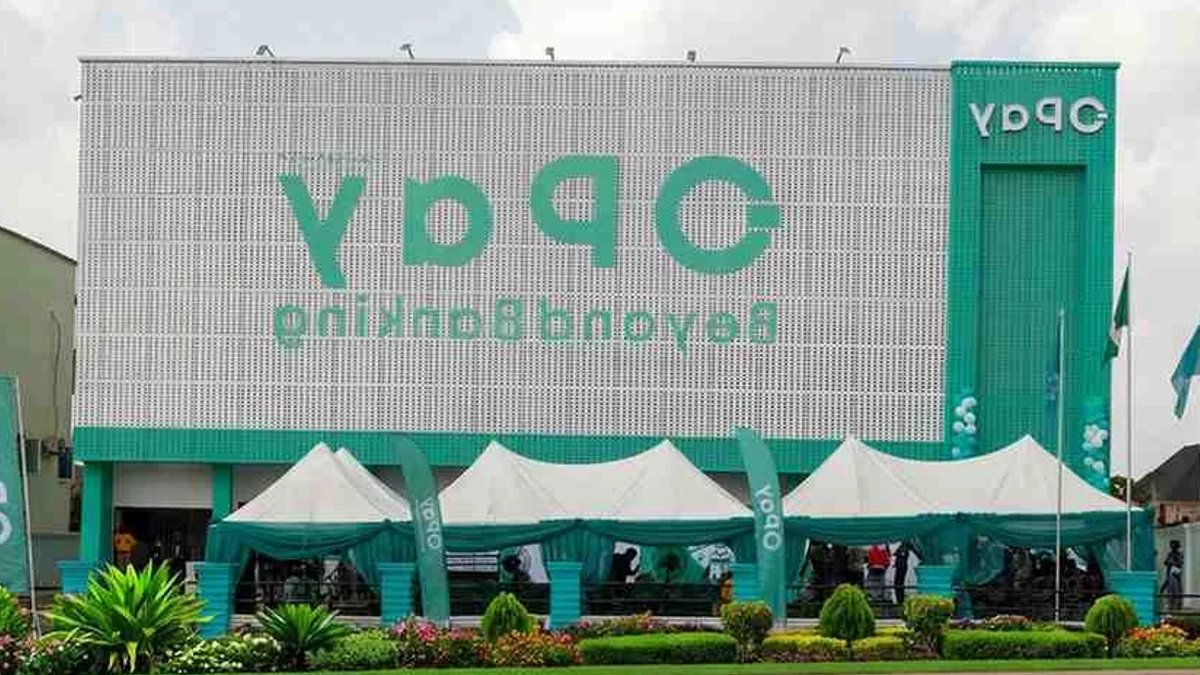
Standard Bank is investing approximately $185 million in OPay, the Nigeria-focused fintech backed by SoftBank, through a private placement running alongside OPay’s planned initial public offering (IPO) in New York. The investment, disclosed in OPay’s F-1 filing, could reach up to $200 million depending on exchange rates, regulatory capital constraints, and the final IPO pricing. Standard Bank’s stake will not exceed 4.99%, and the shares will be subject to a 12-month lockup period.
Unlike recent African listings where existing shareholders sold shares and retained the proceeds, OPay is issuing new shares, meaning capital from both the IPO and Standard Bank’s investment will go directly into the company. The offer opened to institutional investors ahead of its general public listing on October 14, marking a strategic move to secure funding while building credibility with major financial partners.
Bank Backs Fintech Ahead of NYSE Listing
Beyond purchasing equity, Standard Bank and OPay plan to collaborate on merchant payments, foreign exchange, and wealth management products. Standard Bank’s Africa chief executive officer, Lungisa Fuzile, is set to join OPay’s board as part of the arrangement. For OPay, the partnership provides not only capital but also access to established banking relationships and a major institutional investor ahead of its public debut. For Standard Bank, the move offers exposure to a platform with over 50 million monthly active users without having to build that distribution network from scratch. This collaboration shows the growing trend of traditional banks aligning with fintechs to expand digital footprints across emerging markets.
OPay has filed to list American depositary shares on the New York Stock Exchange under the ticker “OPAY.” The company reported revenue of $806 million in the first half of 2026, more than double the year-earlier period, with 89.5% of that revenue generated in Nigeria. A potential secondary listing in Nigeria could bring ownership closer to the market where OPay first scaled its operations. With just 16 days to Moonshot 2026, the timing of OPay’s IPO adds further weight to what promises to be a key moment for African fintech visibility on global stages.
The IPO and Standard Bank’s concurrent investment are expected to strengthen OPay’s financial position as it prepares for public scrutiny. Investors will soon weigh in on a business that processed billions in transactions across Africa’s largest economy, where mobile money and digital payments have reshaped consumer behavior in less than a decade. The momentum mirrors that of Lagos Life, the Sims-style browser game, which crossed 10 million users in eleven days—proof that products can still spread very fast when they hit the right nerve.
Fintech Momentum Meets Market Reality
While OPay’s $806 million half-year revenue signals rapid growth, recent public listings in the region suggest investors are weighing that momentum against valuation discipline. Airtel Money’s first trading session in London closed below its offer price, despite an oversubscribed IPO. The mobile financial services business priced at 196 pence, valuing Airtel Africa’s unit at £5.3 billion ($7 billion), but shares dipped to 193 pence on debut. State of play: An oversubscribed IPO—which counted about 100 institutional investors—only tells us that they wanted more shares than were available at 196 pence. Once full trading begins on October 14, the market will have another opportunity to assess the true worth of such platforms.
Market watchers noted that the dip followed a downward revision from earlier targets of £6 billion to £7 billion. The company sold 270 million shares worth £529 million ($703 million), with existing investors exiting while Airtel Africa retained control. With 53 million monthly active users and $213 billion in transactions processed in the year to June, the business now faces public scrutiny over whether its valuation can hold. Airtel Money had already lowered its ambitions before listing, settling for a $7 billion valuation after previously targeting around $8 billion–9 billion.
Meanwhile, ARC Ride’s expansion into South Africa has not softened investor concerns about profitability. The Kenya-based electric mobility firm tripled revenue to KES 561.6 million ($4.34 million) in 2025, but losses widened to KES 378.1 million ($2.92 million). Battery-swapping revenue grew more than fivefold, now accounting for 32% of total revenue, yet administrative expenses nearly matched total earnings. Motorcycle and product sales more than doubled to KES 380.5 million ($2.94 million), highlighting diversification within its core operations. More interestingly, battery swapping revenue jumped more than fivefold to KES 181.1 million ($1.4 million), lifting its share of revenue from 17% to 32%. Yet, administrative expenses reached KES 551.9 million ($4.27 million), almost as much as the company’s revenue.
ARC Ride’s cash burn reached KES 1.37 billion ($10.6 million) last year, more than double the prior period. Despite raising $33.3 million in September to deploy 5,000 motorcycles, the company’s financial structure leans heavily on debt and financing inflows. At a 30.9% gross margin, covering administrative costs alone would require roughly KES 1.8 billion ($13.8 million) in annual revenue, a threshold the company has not yet crossed. Its cash balance still grew because financing brought in KES 2.75 billion ($21.3 million), while outstanding loans rose sharply.
Trade Routes Shift Toward Local Currencies
Ecobank’s new Beijing office and agreement with China’s Cross-Border Interbank Payment System (CIPS) reflect growing interest in reducing dollar dependency in Africa-China trade. Bilateral commerce reached $348 billion in 2025, with China exporting $225 billion to Africa and importing $123 billion in return. Yet many African importers still convert local currency to dollars before settling yuan payments, adding extra costs at each step. Ecobank, the pan-African banking group that operates in 34 countries, wants to make that part easier. By streamlining payment rails, it aims to support smoother cross-border transactions between African businesses and Chinese suppliers.


