
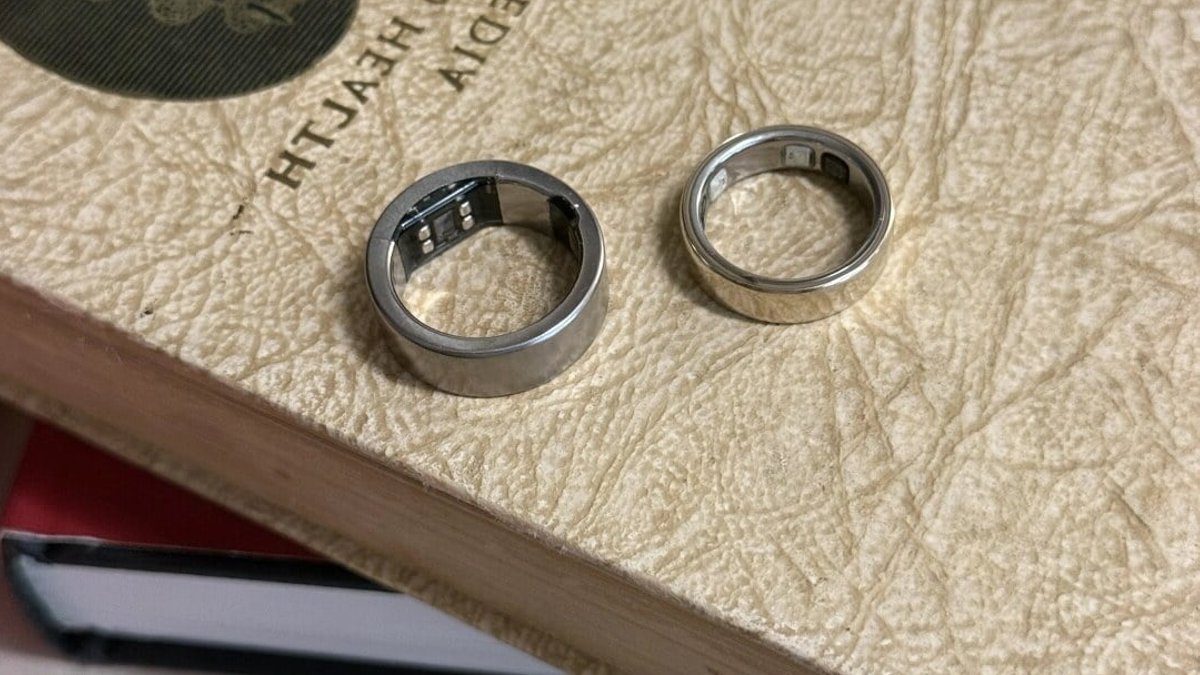
The Ultrahuman Ring Pro’s entry into the U.S. market positions it directly against the Oura Ring 5, the leading smart ring. Deciding between them depends on comfort, pricing structure, and how effectively each device monitors health while staying unobtrusive. After evaluating both, one clear advantage emerges, though individual taste still influences the final choice.
Fit and Comfort: Oura’s Slimmer Design Takes the Lead
A tester who compared both devices called the Oura Ring 5 the most comfortable smart ring they had ever worn, praising its tiny size for making it barely noticeable. While the Ultrahuman Ring Pro is only slightly wider, that extra bulk becomes apparent after prolonged wear. Both rings feature smooth inner surfaces, but the Oura’s overall shape and weight distribution make it superior for full-day use.
Ultrahuman’s design emphasizes extended battery life and additional features over slimness. Though the size difference may seem small, daily wearers—particularly women who often face tighter ring sizes—will appreciate the Oura’s advantage. The Ultrahuman’s increased width can press uncomfortably against the finger over time, whereas the Oura feels like an organic extension of the hand.
Power and Charging: Ultrahuman Extends Use, Oura Offers Convenience
The Ultrahuman Ring Pro lasts between eight and ten days on a single charge, outperforming the Oura Ring 5’s six to nine days. Ultrahuman includes a free charging case that adds an extra 45 days of battery life, though it is bulkier and less portable. The Oura’s optional charging case, priced at $99, provides a 30-day charge and fits easily in a pocket. However, it works only with the Ring 5, not earlier models.
Ultrahuman’s charging case includes a sound alert if the ring is misplaced, a small convenience. The Oura’s case, while sleeker and more practical for daily use, comes at a higher cost. Ultrahuman provides longer battery life without extra payment, while Oura’s solution integrates better into daily routines despite the added expense. For most users, the Oura’s approach will feel more seamless.
The Oura Ring 5’s subscription requirement adds complexity to its pricing. The device itself costs $399 for black or silver models and $499 for gold, rose, or matte finishes. Without the $5.99 monthly subscription, or the $69.99 annual plan, the ring becomes nonfunctional. Over two years, the total cost for a black or silver model reaches $542.76, while gold or specialty colors total $642.76.
Read Also: More fitness devices qualify for HSA funds
The Ultrahuman Ring Pro, priced at $479, avoids mandatory subscriptions but offers optional PowerPlugs, such as respiratory health tracking for $3.99 per month or Tesla integration for $6.90 per month. Even with two PowerPlugs, the annual cost can exceed Oura’s subscription fees. The Ultrahuman Max plan, at $9.99 per month or $99.99 per year, bundles most extras but still results in a yearly total of $578.99, higher than Oura’s two-year cost for gold models.
Most PowerPlugs deliver specialized benefits. For example, Ultrahuman’s respiratory health feature records sleep sounds, while Oura already analyzes breathing disturbances without additional charges. Ultrahuman’s cycle tracking premium costs $3.99 per month, whereas Oura partners with Natural Cycles for a $149.99 yearly alternative, a higher upfront cost but still cheaper than Ultrahuman’s recurring fee.
For users seeking full features, Ultrahuman becomes more expensive. However, those who skip extras find Oura’s subscription model simpler and often more affordable. Ultrahuman’s appeal lies in its biohacking focus, but its optional fees accumulate quickly. Oura maintains a streamlined, predictable approach to its core offering.
App Experience: Oura Prioritizes Clarity, Ultrahuman Pushes Biohacking
Ultrahuman’s app introduces a “longevity” tab that estimates how daily habits, such as VO2 max or arterial stiffness, might influence lifespan in years. While some metrics remain speculative, the feature aligns with its broader biohacking philosophy. Oura, in contrast, focuses on immediately useful metrics, including a “resilience” score that balances stress against recovery and a “symptom radar” to detect early signs of illness. The Oura app also calculates “cardiovascular age,” comparing a user’s health metrics to biological peers. These tools are more straightforward and less prone to overstating scientific certainty, making Oura’s approach more reliable.
Health Monitoring: Oura’s Built-In Features Outperform Ultrahuman’s Paid Add-Ons
Oura’s subscription includes breathing disturbance tracking, a feature Ultrahuman only offers as a $3.99-per-month PowerPlug. The Ultrahuman Ring Pro’s respiratory health add-on records sleep sounds but lacks Oura’s built-in analysis of breathing patterns during rest. Ultrahuman’s premium cycle tracking, priced at $3.99 per month, competes with Oura’s partnership with Natural Cycles, which costs $149.99 per year, a one-time payment that remains cheaper than Ultrahuman’s monthly charge. Oura’s free medical record integration, HealthEx, is another area where Ultrahuman charges extra at $4.99 per month, though Ultrahuman’s version displays records more prominently within the app.


