
The autonomous vehicle industry is experiencing a mix of progress and setbacks, with companies like Waymo and Tesla pushing forward with their robotaxi services. According to the report, Tesla has surpassed Waymo in Texas in the number of robotaxis registered with the state, with 1,507 and 1,345 units, respectively.
A better metric to gauge leadership in the industry would be commercial driverless miles, as well as driverless miles per vehicle, which would indicate cost-efficiency. By these measures, Waymo is still ahead, based on available data.
However, the industry is deeply fragmented, and there is room for multiple players in the US and globally. A recent discussion with Ed Niedermeyer, whose book, “Elon Take the Wheel,” comes out December 1, got me thinking about how Las Vegas could soon become a real-world test for human-driven vs. autonomous ride-hailing services.
Las Vegas as a Testing Ground
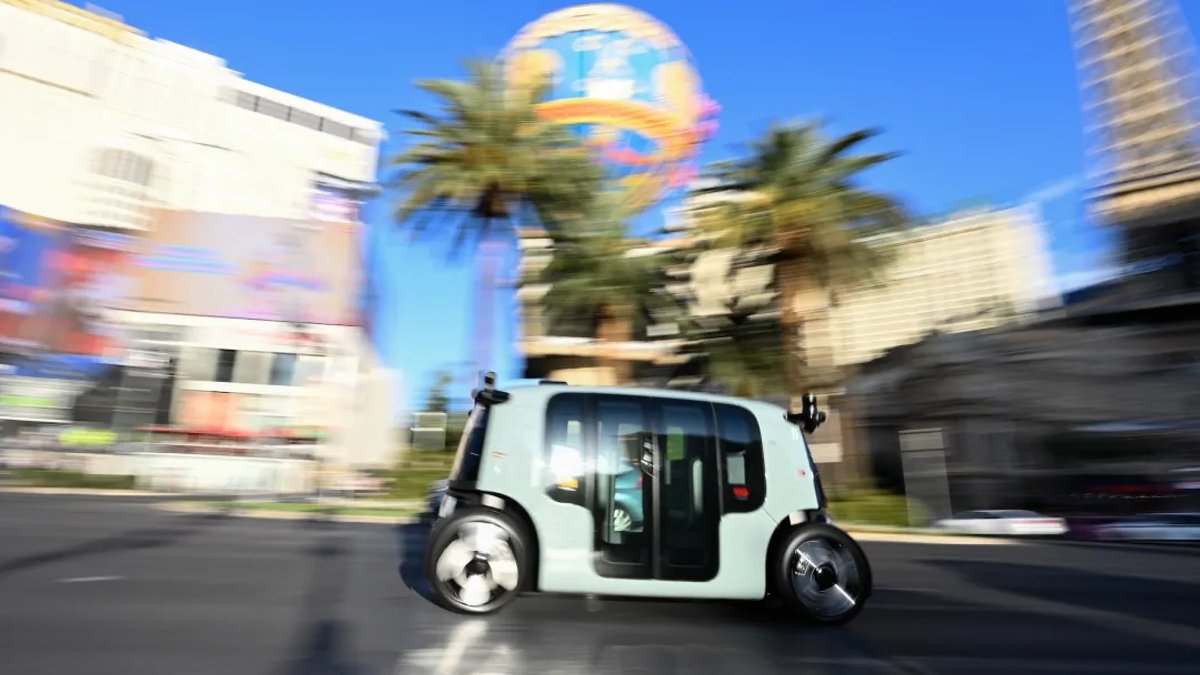
Uber has added Zoox to its ride-hailing app in Las Vegas. Riders can increase their chances of getting a robotaxi, and they can always decline a robot ride. They cannot directly select a robotaxi, but will be matched with one if it’s available. Uber said this will soon change.
Las Vegas will become the first US city where riders can access two fully driverless partners through the Uber app, including Hyundai’s self-driving subsidiary Motional. This will give Uber riders a meaningful choice between human drivers and robotaxis, potentially revealing customer preferences.
Meanwhile, General Motors is working with an executive search firm to identify possible candidates to replace CEO Mary Barra, according to sources. The company has hired Heidrick & Struggles to lead the search, which is taking a two-track approach, focusing on both traditional and non-traditional candidates.
One potential candidate is José Muñoz, president and CEO of Hyundai, while others include Doug Field, CEO of Mind Robotics, and Larry Culp of GE. Internal GM candidates, such as Sterling Anderson and Paul Jacobson, are also being considered.
Industry Developments
In other news, Elysian Aircraft, a Dutch aerospace company, has raised €12 million in private and public funding to develop aviation electrification technologies. Mahindra Last Mile Mobility, an electric three-wheeler business, is planning an IPO in about 18 months, according to Bloomberg.
Numa, a startup developing an AI operating system for dealerships, raised a $45 million Series C round led by New York-based Blue Cloud Ventures. Stark Future, a European electric motorcycle company, raised at least €150 million in equity, according to Reuters.
Tesla has announced plans to spend $3.3 billion to expand its Berlin gigafactory to produce Cybercabs, signaling its global autonomy ambitions. The company has also invited select customers to preorder the autonomous vehicle for personal use, priced at $29,990, with a monthly fee of $299.
Uber has opened its ride-hailing service to children as young as 10 in three US cities and has notified 150,000 drivers that their personal information was stolen in an October data breach. Zipline has launched its autonomous drone delivery business in partnership with Uber, aiming to make 1 million deliveries a day by the end of 2029.
Edmunds has released data showing that the average new vehicle is selling for a record $50,087, while Redwood Materials is using computer vision and machine learning to identify and sort batteries by chemistry before they’re fed into the company’s rotary calciner — a massive cylindrical industrial furnace used to process 40,000 metric tons of raw feedstock a year.
Expansions and Partnerships
Vincue, an automotive tech company that sells software to dealerships, raised $93 million in a round led by Wavecrest Growth Partners, with continued backing from FM Capital.


