
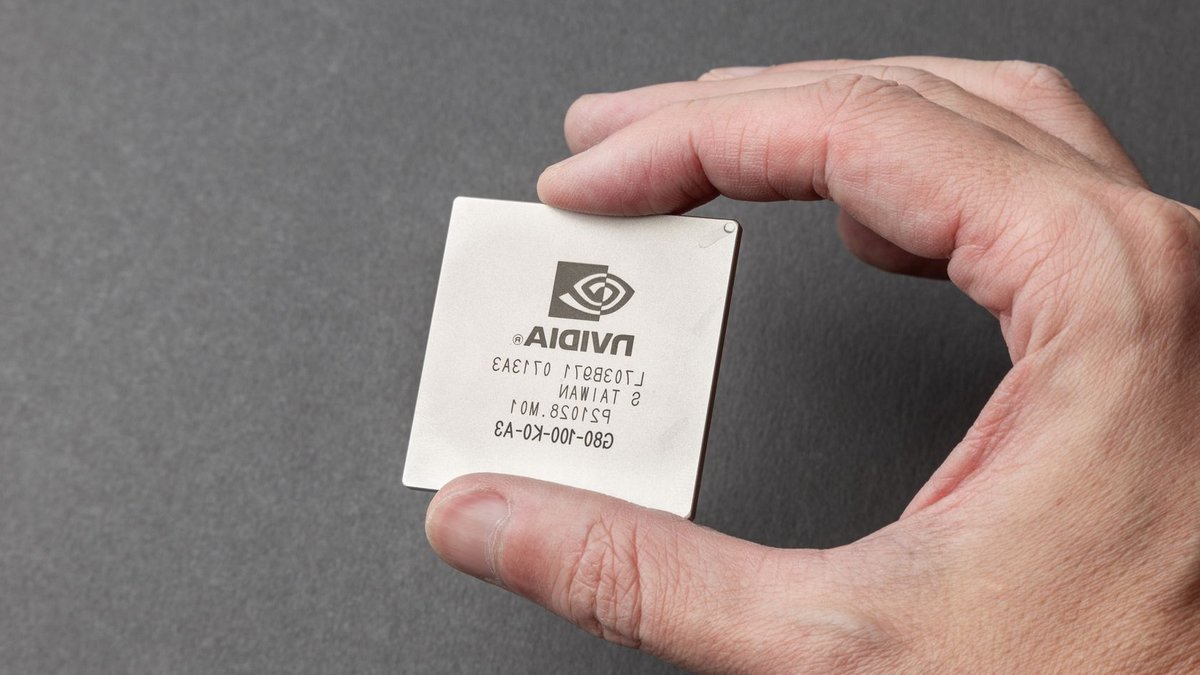
Nvidia’s shares jumped after Jensen Huang was reinstated as chief executive on Monday, yet Yale professor Jeffrey Sonnenfeld warned that investors could be applauding a mistake.
Sonnenfeld warns of security risks
The professor cited research indicating that Nvidia’s most advanced GPUs have slipped past U.S. export controls and are now operating in China. He said the chips are being used in systems linked to the People’s Liberation Army, raising concerns about national security.
He also pointed to a sharp decline in Anthropic stock, arguing that the drop reflects a broader realization: many open-source AI models emerging from China appear to be “distilled” from work done by leading U.S. labs, using Nvidia hardware.
Enthusiasm for Huang’s return was echoed in Asia. A headline in the state-affiliated Star Market Daily proclaimed, “The king is back!”
The board’s decision followed heavy pressure from Washington. Vice President JD Vance led a series of private calls, and former President Donald Trump told the directors directly that he had “made the deal.
Sonnenfeld argued that the directors who backed the move now face a “historic level of individual liability.” He said the board relied on government assurances instead of independent expertise, leaving it vulnerable to lawsuits.
Legal action began quickly. A potential class-action suit was filed within days, seeking compensation for investors who lost money. A shareholder derivative case followed, accusing the directors of ignoring red flags about Huang’s ties to a suspected Chinese operative named Alice Huang.
Beyond the shareholder claims, Nvidia is contending with a Justice Department antitrust probe, an SEC accounting inquiry, a possible FBI review, a California subpoena, and an export-control case that placed partner Megaspeed on the trade blacklist.
Related Post: Nvidia’s AI deal faces open-source backlash
Given the mounting pressure, the company’s leadership will appear before a Senate Banking Committee hearing next week, where Huang has agreed to testify.
An Israeli firm, Lava, recently demonstrated that dozens of Nvidia’s Blackwell chips are present in Chinese facilities, reinforcing concerns about uncontrolled export.
The Commerce Department’s decision to add Megaspeed to the sanctions list on Monday marks the latest official step to curb the flow of advanced compute hardware.
Board oversight and legal exposure
Sonnenfeld noted that the directors relied on informal government assurances rather than independent technical counsel, leaving the company exposed to liability. He added that the firm’s directors-and-officers insurance was insufficient, and that the hired law firm began its investigation only after the board’s reversal, failing to secure the expertise needed for such a high-risk decision.
The professor highlighted that board members displayed what he described as “cowardice,” citing pressure from the former president while emphasizing that shareholder lawsuits cannot be halted by political influence. He referenced fourteen Republican senators, including Pete Ricketts, Josh Hawley, Tom Cotton and John Cornyn, who publicly opposed the reinstatement, showing bipartisan concern over governance failures.
According to the interview, the board has not reviewed any classified intelligence assessments, nor has it seen outcomes from the Senate Intelligence Committee, the Senate Special Committee on Investigations, or related House inquiries. This lack of insight, Sonnenfeld argued, weakens any defense the directors might mount against forthcoming litigation.
Export controls and geopolitical fallout
Recent sanctions placed a former Nvidia partner on the trade blacklist, confirming that advanced chips have been identified at a Chinese military university. Documentation suggests those components could be integrated into weapons destined for nations such as Iran and Russia, echoing earlier reports of Nvidia hardware found in Russian unmanned aerial systems. A U.S. ambassador previously noted discussions about potential arms sales to China, a claim the former president denied.
An Israeli technology firm disclosed dozens of Blackwell-series processors operating within Chinese facilities, contradicting Nvidia’s statements that smuggling was negligible. The source also explained that Chinese open-source AI projects achieve performance comparable to U.S. models by “distilling” them on high-end Nvidia GPUs, a practice that has pressured companies like Anthropic and other leading AI developers.


