
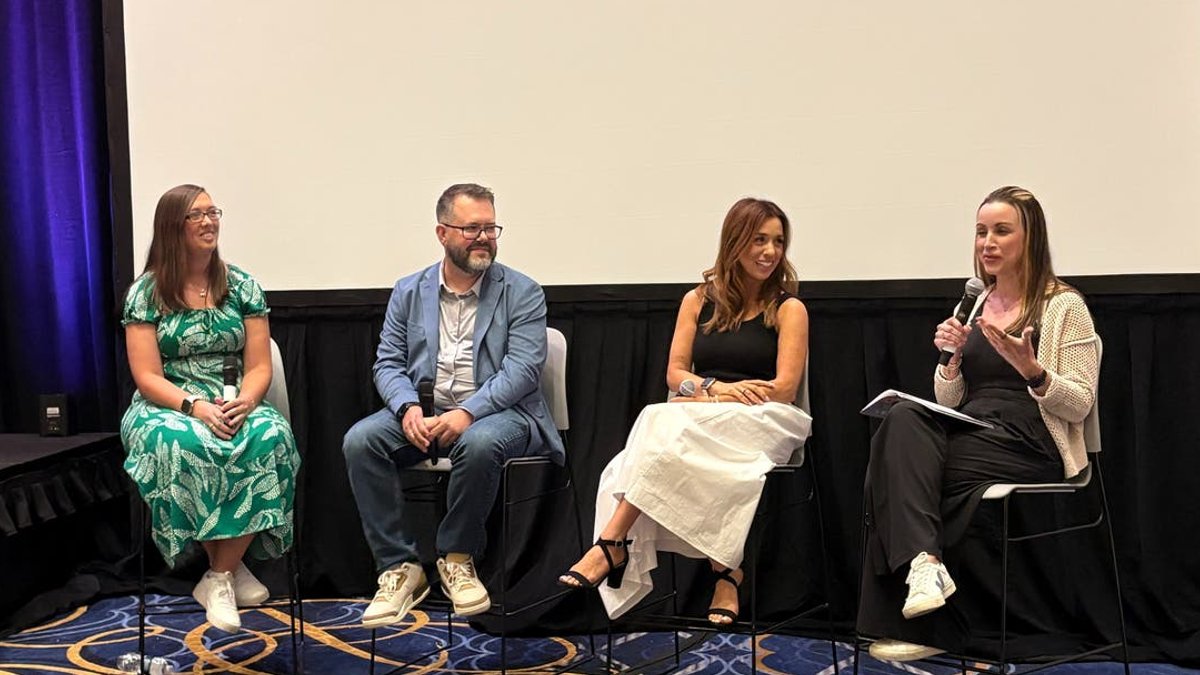
At a recent XChange event in National Harbor, Maryland, a panel of managed service providers (MSPs) discussed how sustainable leadership hinges on trusting teams rather than micromanaging every task.
Leaders Learning to Step Back
Panelists emphasized that leadership in the IT channel often equates to being the answer to every problem. Yet, they argued that this approach is unsustainable. Laura Muysenberg, vice president of marketing and sales operations at People Driven Technology, said she no longer needs to attend every meeting. “If I have the right stakeholders in those meetings, they can do what needs to happen and they can send me the update,” she told the audience.
She added that delegating responsibility gives others a chance to develop confidence. The same sentiment was echoed by Chelsea Skinner, president of Oversee My IT, who likened responsibilities to “glass balls and rubber balls.” The point: some tasks can be dropped and recovered, while others require careful handling. Brian Ruschman, president of C‑Forward, described his own shift away from constant availability, noting that he disables email sync on his phone during family vacations.
Related: Top Tech Firms Lead Fast Growth Rankings
These examples illustrate a broader trend: leaders are setting boundaries to protect both themselves and their staff. By limiting after‑hours notifications, Muysenberg found she could focus on family without feeling guilty. “When I’m home, I’m mom,” she said, noting that work can wait until she returns to her desk.
One awkward phrase slipped into the discussion: “the phone, the sync for the mail, is turned off,” highlighting how even seasoned executives can stumble over technical wording.
These conversations suggest that sustainable leadership is less about visibility and more about creating an environment where teams can act independently. The panel’s consensus was clear: if everything depends on a single leader, the organization cannot thrive over the long term.
Related: MSP Documentation Hurts Margins And Blocks AI Adoption
In a broader sense, the shift reflects a growing recognition that the managed service provider industry must evolve its culture to retain talent and avoid burnout. Leaders who model healthy boundaries set a precedent that can ripple through the entire channel, encouraging other firms to adopt similar practices.
Trust grows when leaders step back.


