
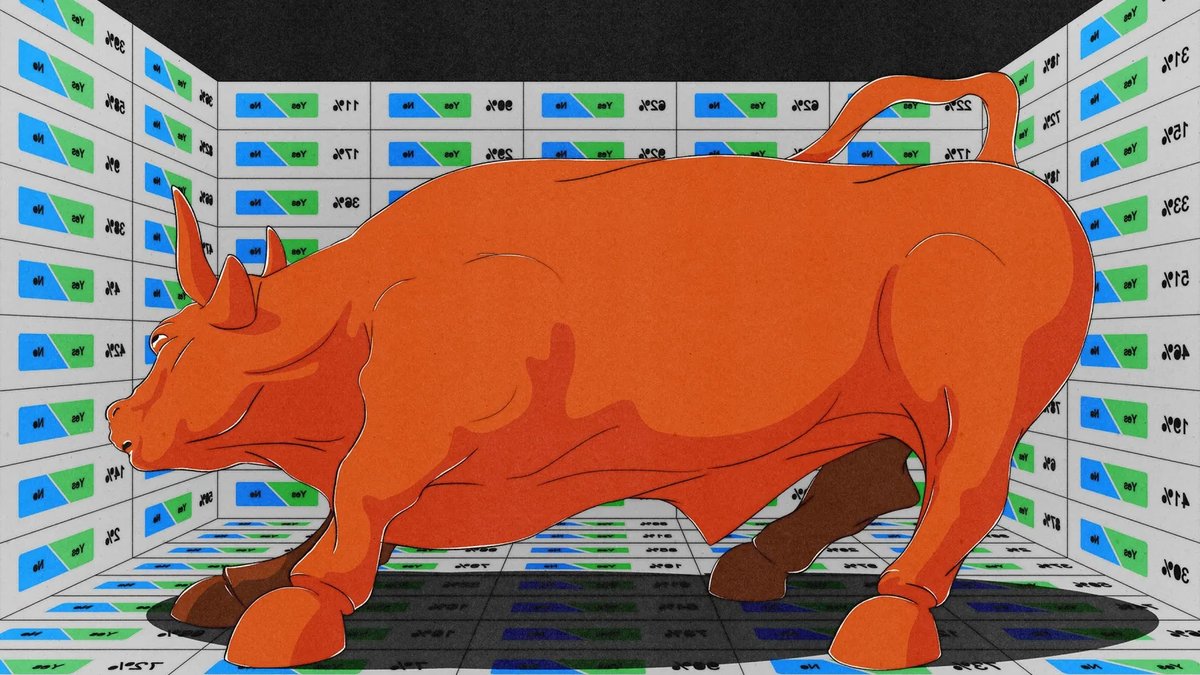
Platforms known as prediction markets allow participants to place bets on whether specific events will occur, with prices adjusting based on collective expectations. The Iowa Electronic Markets, initiated by the University of Iowa in 1988 as part of election research, demonstrated that financial stakes could improve forecasting accuracy compared to conventional polling methods.
A 2008 analysis by the university compared market predictions to 964 national polls across five U.S. presidential elections, revealing the markets matched or outperformed the final vote outcome 74% of the time.
Today’s prediction markets have expanded beyond political forecasting to include speculative contracts on elections, economic indicators, and sports outcomes. Sports contracts have come to dominate trading volume on Kalshi and Polymarket, while politics accounts for a smaller but still significant share, according to the Pew Research Centre.
African Expansion of Prediction Markets
African entrepreneurs are developing their own prediction market ecosystems. In January, Oluwaleke Fakorede, Bayse Markets’ chief technology officer, predicted the continent would achieve product-market alignment in its prediction market sector, with a $100 million startup potentially emerging. At the time, he stated Bayse had processed over $13 million in trades involving more than 200,000 users.
Since then, additional players have entered the space. In March, Luno, the UK-headquartered crypto firm, launched a prediction market focused on crypto prices. Busha, a Nigerian crypto trading startup, launched Signal in August, licenced by the Lagos State Lottery and Gaming Authority (LSLGA) and timed for the English Premier League season.
However, these emerging markets face liquidity challenges. Andy Tudhope, chief technology officer at LAVA—a Web3-focused venture capital firm—explained that traditional financial markets rely on liquidity providers who hedge their positions elsewhere. Prediction markets lack such offsetting opportunities since no secondary market exists for most events being traded.
Despite their analytical potential, these platforms risk being classified as gambling due to their financial incentives and risk-reward structures, which mirror traditional betting mechanics. Regulatory classification further complicates efforts to distinguish them from betting operations. In Lagos, both Busha and Bayse Markets hold gaming-facilitation permits issued by the state’s gaming regulator.
Fakorede dismissed the gambling comparison, arguing that the ability to incur losses when predictions fail is what makes market participation meaningful. He noted that traders commit funds based on their beliefs, and incorrect predictions allow others to profit from the opposing position. The core value proposition, he said, lies in aggregating informed convictions rather than merely processing bets.
The Challenge of Market Differentiation
Prediction markets serve distinct purposes for different users, but to clearly separate them from gambling, platforms must define their core offering. While financial incentives attract participants, the long-term value derives from the information generated by market activity.
Tudhope observed that these systems appeal primarily to individuals who prioritize predictive accuracy over financial returns. Yet most platforms target broader audiences rather than the specialized participants who generate the most reliable market signals.
A Nigerian trader using Bayse Markets, identified only as Micheal, earns approximately ₦100,000 by trading social media engagement markets, such as predicting the number of likes a celebrity post will receive. He applies mathematical and probabilistic models, maintaining a 30% error rate. Such disciplined participants remain rare; most users engage primarily for potential financial gains, particularly in economies where disposable income is limited and speculative returns appear enticing. Sustainable profitability in these markets, especially those with low liquidity, proves difficult to achieve.
Diran Otegbade, a finance professional and early investor in Bayse Markets, explained that prediction markets help him stay informed about financial trends within his professional domain. He uses the platform to monetize well-researched convictions by influencing market prices. However, he acknowledged that most participants still prioritize financial returns, especially in regions with constrained economic resources.
A CNBC analysis from September revealed that during the 2026 FIFA Men’s World Cup, traders on Polymarket and Kalshi allocated $158 million to Egypt winning the tournament, despite the country’s probability never exceeding 0.5%. Spain, the eventual champion, was backed with $152 million in trading volume. The discrepancy illustrated how speculative enthusiasm can distort market pricing, particularly in sports, the most actively traded prediction market category.
Regulatory Hurdles
Prediction markets confront significant regulatory obstacles, particularly in distinguishing themselves from conventional gambling operations.


